
Mayurasana
Peacock Pose
mayura = peacock
Written and reviewed by The Kriya Yogi · Updated 25 September 2026
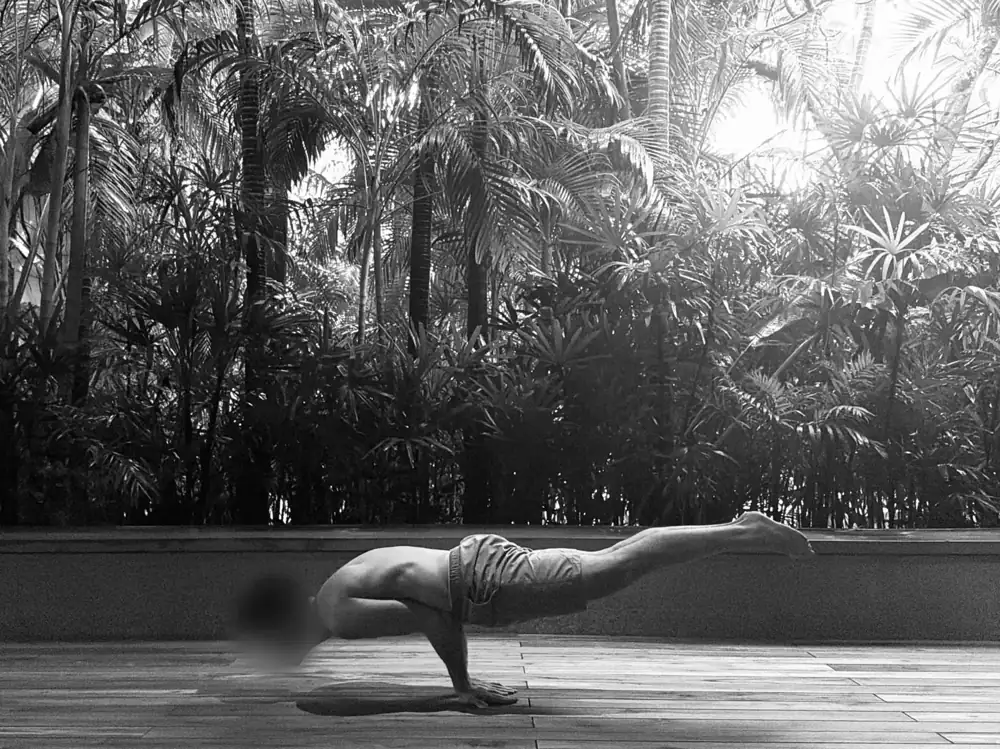
The peacock — the whole body held level above the ground on the elbows pressed into the belly; the classical destroyer of impurities.
- Family
- Arm balances
- Level
- advanced
- Lineage
- classical — HYP ch.1; GS ch.2
- Works on
- wrists · forearms · core
The yogic view
Mayurasana is named and described in the Hatha Yoga Pradipika and Gheranda Samhita, where it is said to help digest heavy foods and even neutralize toxins, claims made within the traditional framework of the texts rather than as medical statements. It is one of the arm-balancing postures with a genuine classical textual lineage, unlike many modern arm balances.
Benefits
- Builds significant strength in the wrists, forearms, and core
- Develops balance and body control through an unusual center of gravity
- Strengthens the muscles supporting the elbows and shoulders
- Trains focused concentration needed to hold an off-center balance
- Traditionally associated with strengthening digestion through abdominal compression on the elbows
How to practise
- Kneel and place the palms on the floor, fingers pointing back toward the feet, elbows bent and pressed together into the soft belly below the ribs.
- Lean forward until the abdomen rests on the upper arms and the chest comes level.
- Stretch the legs back one at a time, feet together, until the body is in one straight line.
- Shift the weight forward until the feet float from the floor; keep the gaze on the ground ahead, not down.
- Hold for a few breaths at first, lower the knees, and rest. Build to thirty seconds over weeks.
For seated or floor-based work, use a clean, stable surface with enough support for comfort.
Common mistakes
- Placing the elbows too far apart or too close together. Fix: position the elbows against the navel/lower abdomen at a width that matches the torso, usually close together.
- Trying to kick up into the pose. Fix: build strength first with the toes on the floor, leaning the weight forward gradually until the feet lift naturally.
- Weak wrist positioning causing pain. Fix: turn the fingers to point toward the feet and spread them wide to distribute weight evenly across the hand.
- Collapsing through the low back. Fix: engage the legs together and reach them back actively so the body forms one straight, strong line.
Variations and progressions
Easier: Practice the preparatory shape with knees on a block behind the elbows, or work on the elbow-to-belly placement seated before attempting to lift.
Easier: Build supporting strength with forearm plank and wrist-strengthening exercises first.
Harder: Move into Padma Mayurasana, taking the legs into lotus before lifting into the balance.
Harder: Practice entering the pose from a squat with control rather than lifting from standing.
Breath and energy
Mayurasana, the Peacock Pose, presses the elbows firmly into the abdomen at the level of the navel, a placement classical hatha texts link to manipura, the center associated with digestive fire and personal will. The pose demands a controlled, steady breath since deep inhalation is restricted by the compression, encouraging short, even breathing through the nose.
Because the balance is unforgiving, Mayurasana is often used as a concentration practice: the mind must stay fully present in the base of the hands and the line of the body, leaving little room for distraction.
What research shows
There is no substantial modern research directly testing the digestive claims made for Mayurasana in classical texts. What is well documented is that the pose requires and builds considerable wrist, forearm, and core strength; any effect on digestion remains a traditional claim rather than an evidenced one.
Questions about Mayurasana
+ Is Mayurasana hard to learn?
+ Where should the elbows go in Mayurasana?
+ Can Mayurasana help digestion?
+ What should I avoid if I have wrist problems?
+ What is Padma Mayurasana?
+ How long should you hold Mayurasana?
+ Is Mayurasana suitable for beginners?
+ What are the modifications for Mayurasana?
+ What should you practise before and after Mayurasana?
+ What does Mayurasana mean in Sanskrit?
Release with
Cautions
- wrist injury
- elbow injury
- pregnancy (modify or avoid)
- recent abdominal surgery
Keep reading
Educational content, not medical advice. Check with a doctor before starting new practices if you have a health condition or are pregnant.