
Parsvottanasana
Pyramid Pose
parsva = side, uttana = intense stretch
Written and reviewed by The Kriya Yogi · Updated 25 September 2026
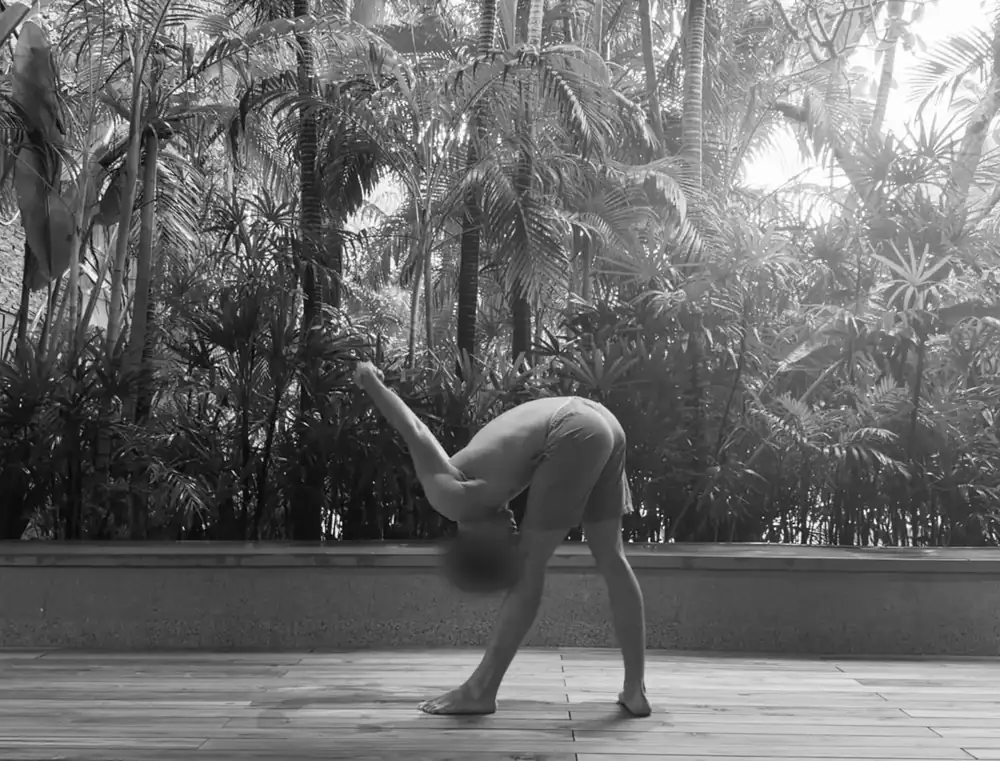
A standing forward bend with the feet in a staggered stance and the hands often clasped behind the back, folding evenly over the front leg.
- Family
- Forward bends
- Level
- intermediate
- Lineage
- modern
- Works on
- hamstrings · hips · balance
The yogic view
Parsvottanasana is not found in the Hatha Yoga Pradipika, Gheranda Samhita or Shiva Samhita. Like most standing postures common in contemporary practice, it belongs to the modern, twentieth-century systematization of asana associated with figures such as Krishnamacharya and his students, who developed extensive standing-pose sequences not present in earlier hatha texts.
Benefits
- Deeply stretches the hamstrings of the front leg and the calf of the back leg
- Encourages hip squaring and pelvic alignment, useful groundwork for other standing poses
- Stretches the shoulders and chest when the hands are placed in reverse prayer
- Traditionally said to calm the mind through the forward-folding action and inward gaze
- Builds balance and steadiness through the standing back leg
How to practise
- Stand at the top of the mat, then step the left foot back about one leg's length, both feet grounded and hips squared to the front.
- Turn the back foot in slightly, keeping both hip points facing forward.
- Bring the hands behind the back into reverse prayer, or hold opposite elbows if the shoulders are tight.
- Inhale and lengthen the spine, lifting the chest.
- Exhale and hinge forward from the hips, keeping the spine long rather than rounding.
- Fold over the front leg only as far as the back stays flat, resting the torso toward the front thigh.
- Keep both legs active and straight, weight balanced between both feet.
- Hold for 5-8 breaths, then inhale to rise with a flat back; repeat on the other side.
For seated or floor-based work, use a clean, stable surface with enough support for comfort.
Common mistakes
- Rounding the spine to reach further: defeats the purpose of the fold; only go as deep as a flat back allows.
- Letting the hips twist out of square: reduces the stretch's evenness; check both hip points face forward before folding.
- Locking the front knee harshly: keep a soft, engaged knee rather than hyperextending.
- Forcing the reverse-prayer bind: strains the shoulders and wrists; use opposite-elbow hold instead if the bind is not accessible.
Variations and progressions
- Easier: shorten the stance and place hands on blocks or the front shin instead of binding.
- Easier: keep a soft bend in the front knee to protect the hamstring.
- Harder: deepen toward the shin or floor while maintaining reverse prayer.
- Harder: close the eyes briefly once stable to challenge balance and proprioception.
Breath and energy
The forward fold of Parsvottanasana naturally lengthens the exhale, and the asymmetric stance encourages steady, quiet focus as the practitioner balances between two unevenly weighted legs. The chest-opening reverse-prayer hand position, when accessible, counters habitual forward-rounding of the shoulders and is often used to cultivate awareness of the heart center.
As an 'intense side stretch' (its literal meaning), it is considered a pose that quiets and internalizes attention, commonly placed within standing sequences as a moment of introspection after more expansive, energizing shapes.
What research shows
Standing forward-bend postures like Parsvottanasana are generally studied only as part of broader yoga-sequence interventions, which report modest improvements in hamstring flexibility and self-reported balance. No isolated research specifically supports unique benefits from this pose, and claims of internal organ 'cleansing' from forward folds are not supported by physiology.
Questions about Parsvottanasana
+ What is the English meaning of Parsvottanasana?
+ Do I need to bind my hands behind my back?
+ Why do I feel this more in one leg than the other?
+ Is Pyramid Pose a hip opener or a hamstring stretch?
+ Can I keep my knees bent in Parsvottanasana?
+ How long should you hold Parsvottanasana?
+ Is Parsvottanasana suitable for beginners?
+ What are the modifications for Parsvottanasana?
+ Who should avoid or modify Parsvottanasana?
+ What should you practise before and after Parsvottanasana?
Prepare with
Release with
Cautions
- back injury
- high blood pressure
More forward bends
- Ardha Uttanasana · Half Standing Forward Bend
- Trianga Mukhaikapada Paschimottanasana · Three Limbs Facing One Foot Forward Bend
- Upavistha Konasana · Wide-Angle Seated Forward Bend
- Uttanasana · Standing Forward Bend
- Prasarita Padottanasana · Wide-Legged Forward Bend
- Marichyasana B · Pose Dedicated to Marichi, B
Keep reading
Educational content, not medical advice. Check with a doctor before starting new practices if you have a health condition or are pregnant.