Longevity · 20 September 2026
Yoga for Longevity: What Breath, Movement, and the Evidence Really Tell Us
Can yoga help us age well? A careful look at slow breathing, movement, stress, sleep, and one founder’s striking—but limited—biological-age result.
Written and reviewed by The Kriya Yogi · Updated 20 September 2026
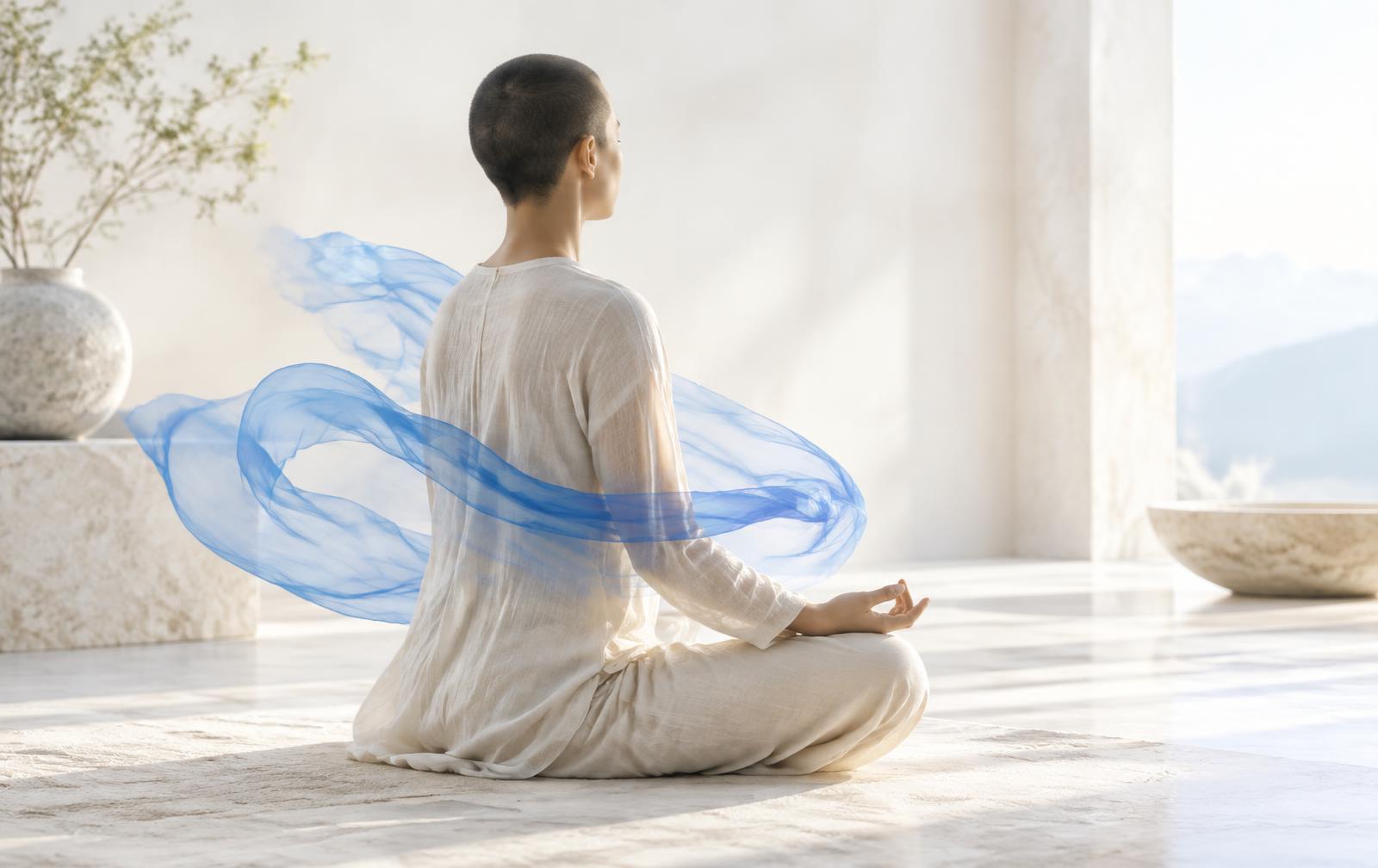
Longevity is easy to sell as a number. A younger biological age. A lower resting heart rate. More years added to a life. Yoga belongs in this conversation, but not because it offers a shortcut around aging. Its more credible value is quieter: it can help us practise some of the conditions that support health across a lifetime—regular movement, steadier breathing, balance, mobility, sleep, and the ability to recover from stress.
The short answer: yoga may support healthy aging by improving several contributors to long-term health. Research suggests benefits for balance, mobility, perceived stress, sleep, and—among some people—blood pressure and autonomic regulation. That is not the same as proof that yoga lengthens lifespan, reverses aging, or makes a person biologically younger.
This distinction matters. It lets us discuss yoga and longevity without turning a meaningful practice into an unscientific promise.
Longevity is more than living longer
In medical research, lifespan means the number of years lived. Healthspan refers more broadly to the years lived with useful physical and cognitive function. Neither can be reduced to a single pose, breathing ratio, supplement, or laboratory score.
Age also has several meanings. Chronological age is simply time since birth. “Biological age” is an attempt to estimate how certain biomarkers compare with patterns seen across populations. Depending on the test, an estimate may use blood chemistry, DNA methylation, physical performance, or a proprietary combination of measurements. Different methods can produce different answers for the same person.
For yoga practitioners, a more grounded question is therefore not, “Can this practice stop aging?” It is: Which capacities can I maintain as I age, and how might practice support them?
Those capacities include strength, joint range, balance, respiratory comfort, cardiovascular health, sleep, emotional regulation, and social connection. Yoga can contribute to several of them. It cannot replace the whole picture, which also includes nutrition, appropriate aerobic and resistance exercise, medical care, genetics, environment, relationships, and chance.
A personal result—and what it cannot prove
At age 30, I received a clinical laboratory report that estimated my biological age at 16. I found the result striking. It also raised the same question that many people would ask: did years of yoga and breath practice contribute?
The honest answer is that one result cannot tell us.
This was a personal data point, not a controlled experiment. A laboratory estimate does not isolate yoga from sleep, nutrition, other movement, genetics, illness history, or the many unmeasured parts of a life. Nor does an estimated biological age of 16 mean that every organ or system is literally equivalent to that of a 16-year-old. It does not predict an exact lifespan.
Researchers have also warned that aging clocks can be useful at a population or research level while remaining uncertain for individual clinical decisions. Results may vary by the clock used, tissue sampled, laboratory method, and statistical model. Many reports do not communicate a clear margin of error.
So I share this result as part of my story, not as proof. It gives me a reason to stay curious. It does not allow me to claim that yoga reversed my age, and it should not be used to promise the same outcome to anyone else.
What slow breathing may change
Breathing is the most direct bridge between classical yoga and modern physiological research. Breath happens automatically, but its pace and pattern can also be influenced deliberately.
Slow-paced breathing—often studied around six breaths per minute—can alter the relationship between respiration, heart rate, and blood-pressure regulation. Reviews report short-term changes in heart-rate variability and baroreflex sensitivity, both of which relate to autonomic regulation. These findings are sometimes described as increased parasympathetic or “rest-and-digest” activity.
That language needs care. A brief improvement in heart-rate variability does not prove slower biological aging. Heart-rate variability is influenced by age, fitness, sleep, medication, alcohol, illness, posture, measurement conditions, and the device used. It is a useful signal in context, not a longevity score.
The practical importance may be simpler. Slow, comfortable breathing can help some people move from agitation toward steadiness. In controlled studies, breathing practices often reduce perceived stress, while changes in cortisol and other physiological stress markers are less consistent. Subjective relief still matters, but it should not be inflated into a claim that every stress pathway has been repaired.
If you are new to breath practice, begin with pranayama without forcing the breath and explore nadi shodhana. Comfort comes before duration. Breath retention, rapid breathing, and strong pressure techniques are not required for a useful practice.
Blood pressure: promising, but not a treatment claim
Reviews of randomized trials suggest that yoga may modestly reduce blood pressure, especially when compared with no intervention or a waiting list. Results become less certain when yoga is compared with another active health programme, and the trials vary widely in duration, style, participant health, and quality.
This means yoga may be a supportive part of a heart-healthy routine. It does not mean yoga treats hypertension on its own, works as well as medication, or makes monitoring unnecessary.
Anyone with diagnosed high blood pressure should follow their clinician’s advice and should not stop medication because a breathing or yoga routine feels effective. Strong breath retention and forceful practices may be inappropriate for some cardiovascular conditions.
A useful longevity practice is not the most intense one. It is the one that can be repeated safely, adjusted honestly, and sustained over time.
Mobility, balance, and the freedom to keep moving
The strongest case for yoga and healthy aging may be functional rather than dramatic. A meta-analysis in older adults found improvements in lower-body flexibility, balance, mobility, and muscle strength, although it did not find a significant improvement in cardiorespiratory endurance.
That difference is important. Yoga can train transitions from the floor, controlled weight shifts, awareness of foot pressure, and range of motion. These skills may help preserve confidence in everyday movement. But a gentle yoga class should not automatically be counted as sufficient aerobic training.
A complete plan for healthy aging usually includes:
- regular movement through a comfortable range;
- progressive strength work suited to the individual;
- aerobic activity appropriate to health and capacity;
- balance practice;
- recovery and sleep;
- adequate nutrition and medical care.
Asana can participate in that plan. It does not have to compete with walking, cycling, swimming, or resistance training.
Start with stable, scalable postures such as Tadasana, Balasana, and Adho Mukha Svanasana, adapting each to your body. A steady surface matters more than performance; if you use a mat, choose one that gives reliable grip and enough cushioning for your joints. Our cork-tone practice mat is one option, not a requirement for practice.
Stress, sleep, and recovery
Chronic stress and poor sleep are associated with worse health outcomes, but that does not make every calming activity an anti-aging intervention. The evidence supports more modest language.
Yoga and breathing programmes frequently improve self-reported stress. Yoga may also improve sleep quality for some groups, although results vary with the population, practice frequency, session length, and comparison group. A person who sleeps better may have more energy to move, prepare food, connect with others, and make sound decisions. Those indirect effects can be meaningful even when no aging clock is measured.
This is where yoga’s repeatability matters. A short evening practice of comfortable postures, unforced nasal breathing, and quiet attention may become a reliable signal that the active part of the day is ending. It is not a cure for insomnia. Persistent sleep problems, loud snoring, breathing interruptions, or severe daytime sleepiness deserve professional assessment.
For a quieter practice, explore Shavasana, Pratyahara, or Dhyana.
What classical yoga says about breath and life
Classical yoga texts treat breath as more than respiratory exercise. The Hatha Yoga Pradipika links the movement of breath with the movement of mind and gives pranayama a central place in practice. The Gheranda Samhita also presents breath regulation within a larger path that includes conduct, cleansing, posture, sensory discipline, concentration, and meditation.
These are traditional frameworks, not modern clinical trial reports. Their language about vital force, purification, and mastery should be read in its own philosophical and historical context. It should not be automatically translated into claims about oxygen saturation, telomeres, mitochondria, hormones, or disease reversal.
That separation does not diminish the tradition. It protects it from being reduced to scientific-sounding slogans it never made.
Read our commentary on pranayama in the Gheranda Samhita and the Hatha Yoga Pradipika’s chapter on pranayama. The classical aim is transformation of practice and awareness—not a promise to remain chronologically young.
A measured breath practice for healthy aging
The following is a gentle awareness practice, not a medical protocol.
- Sit in a supported position or lie down. Let the spine be comfortable rather than rigid.
- Notice the natural breath for one minute without changing it.
- Allow the exhalation to become slightly softer and longer, but never strained.
- If counting is comfortable, try inhaling for four counts and exhaling for five or six. The numbers are optional.
- Continue for three to five minutes while keeping the face, throat, and abdomen relaxed.
- Return to an ordinary breath before standing.
Stop if you feel dizzy, air-hungry, panicked, numb, or unwell. Do not pursue a target of six breaths per minute if it creates strain. People who are pregnant or who have cardiovascular, respiratory, neurological, or panic-related conditions should seek individual guidance before using breath retention or forceful pranayama.
Consistency matters more than an impressive ratio. A practice that leaves you calm and clear is more useful than one that turns breathing into a test.
Can yoga help you live longer?
Direct evidence is limited. Observational studies sometimes find lower mortality among people who practise yoga, but people who choose yoga may also differ in age, income, diet, smoking, exercise, healthcare access, and existing health. In one national analysis, a large unadjusted association weakened and was no longer statistically significant after age was considered.
No randomized trial has established that yoga extends lifespan in the general population. It would be extraordinarily difficult to run such a study over decades while controlling adherence and every other lifestyle factor.
The defensible conclusion is therefore:
Yoga may support abilities and health markers that matter during aging. We do not yet have evidence that yoga itself adds a specific number of years to human life.
That answer is less sensational than “reverse your age,” but it is more useful. It directs attention toward behaviours we can actually practise.
How to build a longevity-minded yoga routine
A sustainable weekly structure could include two or three sessions of posture practice, brief daily breathing, walking or another aerobic activity, and progressive strength training. The exact mix depends on health, goals, and access.
Within yoga, consider four qualities:
1. Capacity
Can you rise from the floor, carry weight, walk with confidence, and recover after effort? Use yoga to support these abilities, not to avoid other forms of movement.
2. Regulation
Can you notice tension and reduce unnecessary effort? Slow breathing and meditation may help with this skill, particularly when practised without force.
3. Adaptability
A practice should change when the body changes. Props, shorter holds, a chair, or a smaller range are intelligent adaptations, not failures.
4. Continuity
A modest practice sustained for years is more relevant to healthy aging than occasional extremes. Leave enough energy to return tomorrow.
The founder’s perspective
My laboratory result did not give me permission to claim victory over aging. It reminded me that numbers are most useful when they deepen inquiry rather than end it.
I cannot separate yoga from every other factor in my life, and I cannot know whether the estimate will remain the same on another test. What I can describe is the lived effect of returning to breath, movement, discipline, and attention: practice gives me a structure for caring for the body without worshipping youth.
That is the longevity I trust most—not an attempt to become 16 again, but the cultivation of enough steadiness, mobility, and awareness to meet each age fully.
Frequently asked questions
Does yoga reverse biological aging?
There is not enough evidence to say that yoga reverses biological aging. Some studies report changes in stress, cardiovascular, or molecular markers, but those findings do not establish that a person has become biologically younger or will live longer.
Is a biological-age test medically definitive?
No. Tests use different biomarkers and algorithms, and their individual accuracy and clinical meaning remain uncertain. A result can be discussed with a qualified clinician, but it should not be treated as a diagnosis or a precise lifespan forecast.
What type of yoga is best for longevity?
No single style has been proven to extend life. A balanced approach that supports strength, mobility, balance, breathing comfort, and consistency is more defensible than choosing a style based on anti-aging claims.
How often should I practise slow breathing?
Many people can begin with three to five comfortable minutes most days. The pace should remain easy. More is not automatically better, and forceful breathing or retention requires greater caution.
Can yoga replace cardio or strength training?
Usually not. Some vigorous yoga can contribute to physical activity, while gentle practice may not provide enough aerobic or progressive strength stimulus. Yoga works well as one part of a broader movement routine.
Is six breaths per minute ideal for everyone?
No. Around six breaths per minute is common in research, but individual comfort differs. A slower pace is not beneficial if it causes air hunger, dizziness, or anxiety.
Can I stop blood-pressure medication if yoga lowers my readings?
No. Medication changes should be made only with the clinician who manages your care. Yoga may be supportive, but it is not a substitute for prescribed treatment or monitoring.
What matters more: the test result or daily function?
A laboratory result can add information, but daily function—sleep, mobility, strength, mood, cardiovascular health, and the ability to participate in life—provides essential context. Healthy aging cannot be summarized by one number.
Sources and further reading
- National Center for Complementary and Integrative Health, Yoga: Effectiveness and Safety.
- Wieland et al., Yoga for treating hypertension: a systematic review and meta-analysis, PLOS ONE.
- Youkhana et al., Yoga-based exercise improves health-related quality of life and mental well-being in older people, systematic review and meta-analysis.
- Zaccaro et al., How Breath-Control Can Change Your Life, systematic review of slow breathing.
- Tyagi and Cohen, Yoga and heart rate variability: a comprehensive review.
- Cramer et al., Yoga in the prevention of cardiovascular disease.
- Patel et al., Yoga practice and mortality in a national cohort.
- Bell et al., Limits of biological-age tests for individual use.
This article is educational and is not medical advice. Yoga and breathing practices should be adapted to the individual. Seek qualified medical care for symptoms, diagnosed conditions, medication decisions, or concerns about a laboratory result.
Tags · longevity · breath · pranayama · yoga · meditation