
Practice · 18 September 2026
Beginning Pranayama Without Forcing the Breath
The Gheranda Samhita is careful about how breath practice begins. Here is what that caution is protecting.
Written and reviewed by The Kriya Yogi · Updated 27 September 2026
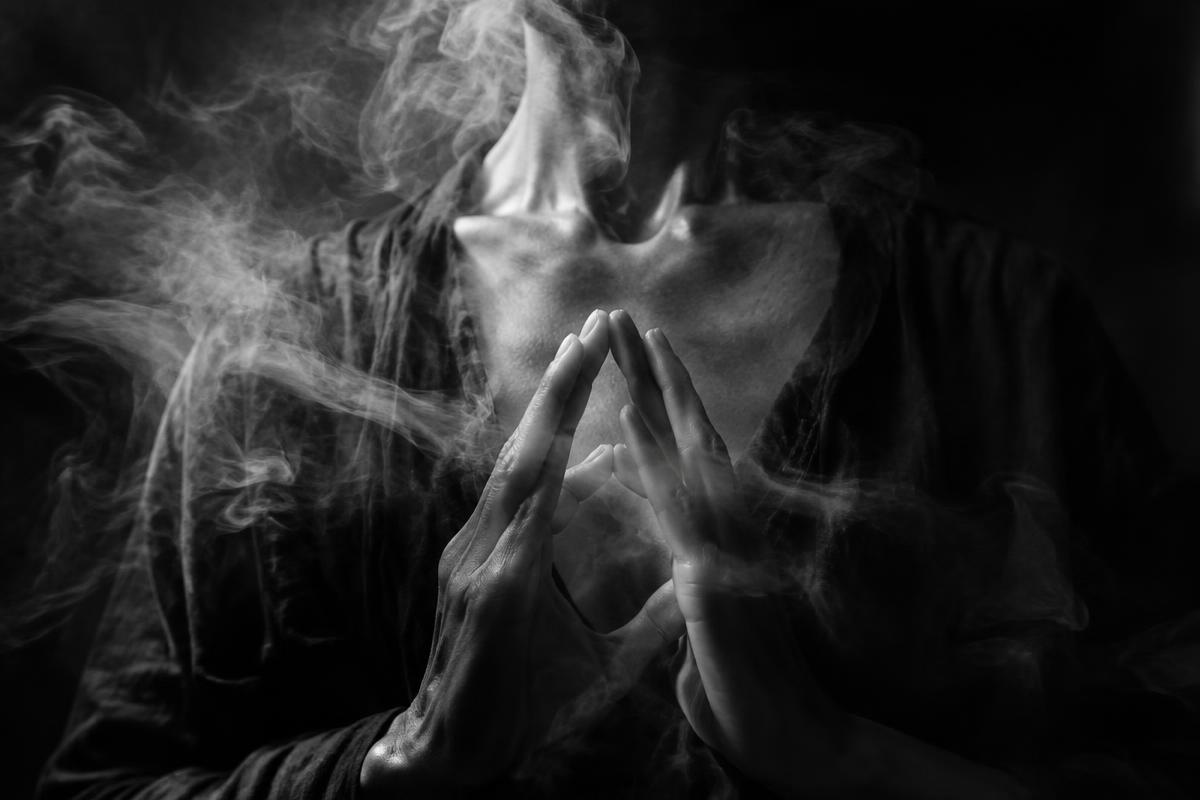
Slow is the instruction
The Gheranda Samhita treats pranayama as something earned rather than something started. Before it discusses retention of the breath, the text asks for a body and nervous system that have already been prepared through cleansing, steady posture, and time. This is not a superstitious warning about breathing being dangerous. It is a practical observation, repeated across the classical hatha yoga texts, that forced retention in an unprepared body produces agitation rather than the calm it is supposed to deliver.
Pranayama is often introduced to new students as a set of counted ratios: inhale for four, hold for four, exhale for eight. Ratios like these are not wrong, but they are advanced tools, and handed to a beginner too early they tend to produce exactly the tension the practice is meant to dissolve. The classical instruction is slower and, in a sense, less exciting. It asks the practitioner to first become an accurate observer of the breath as it already is, before attempting to change it at all.
Why sequence matters
Traditional hatha yoga is built in layers, and pranayama sits on top of a settled body, not the other way around. The Hatha Yoga Pradipika describes asana as a preparation for pranayama — steadiness and ease in the body are what make sustained attention to breath possible in the first place. A body that is fidgeting, sore, or distracted by discomfort cannot observe a subtle process like breath with any accuracy. This is why most classical instruction sequences a few minutes of stillness, ideally after some physical practice, before any breath technique begins.
There is also a reason retention (kumbhaka) is placed last in the classical progression rather than first. Retention increases internal pressure and demand on the nervous system. Traditional texts describe this stage as being reserved for practitioners who have already stabilized long, smooth, unforced breathing. Skipping to retention because it seems like the "real" pranayama is a common and understandable mistake, but it inverts the order the tradition actually recommends.
A safe and traditional beginning
For someone starting out, the sequence below reflects the spirit of the classical approach without requiring any specialized background:
- Sit so that the spine is upright and the ribs are free to move. A cushion under the hips can make this much easier to sustain without strain.
- Spend several minutes simply observing the breath as it naturally occurs, before changing anything about it. Notice its length, its evenness, where in the body it moves.
- When you are ready to begin shaping the breath, lengthen the exhale first. The exhale is considered the calming half of the cycle, and lengthening it has an immediate, noticeable effect on the nervous system without requiring any forcing.
- Introduce gentle, balanced breathing — an inhale and exhale of roughly equal length — without straining to extend either one beyond what is comfortable.
- Leave retention aside entirely until breathing that is long, smooth, and effortless has become your normal baseline, not an occasional achievement.
None of these steps require counting to impressive numbers or holding the breath until the chest tightens. They require patience, which is the actual content of the instruction.
Reading the signs of pushing
The tradition is also useful because it gives fairly concrete signs that a practitioner has moved too quickly. Gasping at the end of a breath cycle, tension gathering in the jaw or shoulders, a mind that feels more agitated after practice than before — these are not signs of progress. They are signs that the practice has outpaced what the body and nervous system are ready for. In the classical framing, restraint is not a lesser version of the practice reserved for beginners; restraint is the practice itself, at every stage. Even advanced practitioners are described as working within a margin of ease rather than at the outer edge of capacity.
This reframing changes what "advancing" in pranayama actually looks like. Progress is not measured by how long a breath can be held, but by how effortlessly a long, steady breath can be sustained without agitation. A practitioner who breathes calmly for twenty long, smooth cycles has, in the classical sense, advanced further than one who forces a single dramatic retention and spends the next few minutes recovering from it.
Bringing this into daily practice
In practice, this often means beginning with far less than students expect. A few minutes of quiet observation, a few minutes of lengthened exhalation, done consistently, will do more for the nervous system over weeks and months than an occasional attempt at an advanced technique. The classical texts were written for students who often had years to devote to this progression, sometimes under close guidance from a teacher who could observe when a body was actually ready to advance. Most of us do not have that luxury, which is exactly why moving slowly and self-monitoring honestly matters more, not less.
Frequently asked questions
How long should a beginner practice pranayama each day?
There is no fixed classical number that applies to everyone, but a modest daily practice of five to ten minutes, done consistently, is more valuable than occasional longer sessions. The emphasis in the tradition is on steadiness over time rather than intensity in a single sitting.
Is it normal to feel light-headed during breath practice?
Light-headedness is generally a sign that the breath is being altered more forcefully than the body is ready for. The traditional response is to return immediately to natural, unforced breathing and reduce the intensity or duration of the technique next time, rather than pushing through the sensation.
Do I need to master asana before starting pranayama?
You do not need an advanced asana practice, but you do need enough physical steadiness to sit upright comfortably for several minutes without fidgeting or pain. This is why the classical sequence places some grounding physical practice before breathwork — it is about having a stable seat, not about flexibility.
Why does the tradition emphasize the exhale rather than the inhale?
The exhale is associated in the classical texts with release and settling, and in practice most people notice its calming effect more immediately than that of the inhale. Beginning with a slightly longer exhale is considered a gentle, low-risk way to start shaping the breath before attempting more complex ratios.
Tags · pranayama · gheranda samhita · breath