Shoulder Stand
Sarvangasana
Written and reviewed by The Kriya Yogi · Updated 20 September 2026
Source · HYP 3.79
The queen of the inverted postures: the whole body rests on the shoulders, drawing the flow of energy upward and inward.
The yogic view
The yogic view
Sarvangasana, "the pose of the whole body", is the form the classical inversion takes in modern practice. The Hatha Yoga Pradipika describes Viparita Karani — the inverted action — as the method by which the nectar dripping from the moon at the crown is preserved: turned upside down, the sun in the belly no longer consumes it, and the yogi "does not perish even when the world dissolves" (HYP 3.79–80). The texts promise that the grey hairs and wrinkles of the practitioner who holds this inversion daily are turned back.
Whether we read the nectar literally or as a symbol, the principle is clear: reversing the body reverses the ordinary downward dissipation of vitality. Blood, breath and attention, normally pulled toward the earth and the senses, are gathered upward toward the throat and crown. The chin lock formed by the pose directs prana into sushumna; the stillness of the pose steadies the mind. In the classical view this is not exercise but a seal — a way of closing the leaks through which life-force drains.
For this reason the tradition treats the shoulder stand as a practice of conservation and quiet, not of effort. It is held, not performed.
What research shows
Inversions shift circulation toward the heart and head and tend to quiet the nervous system; small studies show parasympathetic activation during supported inversion. The pose also places substantial load on the cervical spine, which is why blanket support and the contraindications below matter.
How to practise
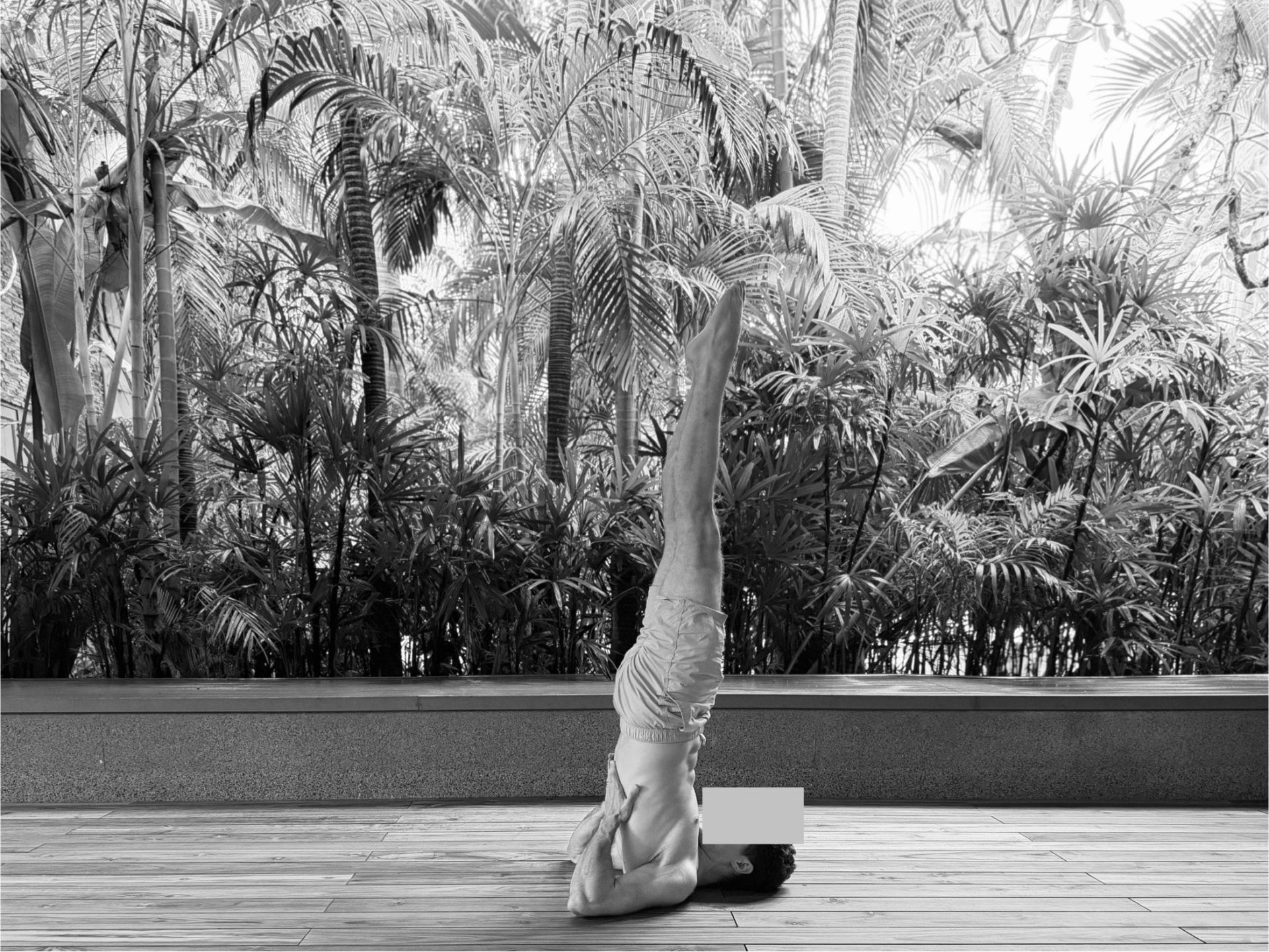
- Lie on the back, arms beside the body, palms down.
- Exhale, swing the legs up and lift the hips, supporting the back with the hands.
- Walk the hands toward the shoulder blades; straighten until weight rests on the shoulders, not the neck.
- Chest toward chin; legs, hips and torso in one line; breathe slowly.
- Hold 30 seconds at first, building over months toward three minutes.
- Lower slowly, rolling the spine down; rest in Shavasana.
For seated or floor-based work, use a clean, stable surface. Our natural cork yoga mat offers a grounded 5 mm surface for regular practice.
Contraindications
Avoid with neck injury or cervical disc problems, uncontrolled high blood pressure, glaucoma, heart disease, and during pregnancy unless established under guidance. Never turn the head in the pose.
Related practices
Educational content, not medical advice. Check with a doctor before starting new practices if you have a health condition or are pregnant.