Mantra (mantra): 'Instrument of Thought', from Vedic Chant to Modern Use
मन्त्रmantra
Written and reviewed by The Kriya Yogi · Updated 21 September 2026
Mantra is usually parsed as 'instrument of thought' (from man, 'to think', plus the instrumental suffix -tra); classically it names sacred Vedic verses and seed syllables used in precise ritual recitation, a more specific practice than simply repeating a calming word.
In short
- The common scholarly parsing is man ('to think') plus -tra (an instrumental suffix) — 'instrument of thought' or 'that which protects the mind'; some traditional etymologies favour 'that which protects [when reflected upon]'.
- The oldest mantras are Vedic verses (the hymns of the Rig Veda and other Vedas), recited with attention to precise sound and metre, not freely chosen phrases.
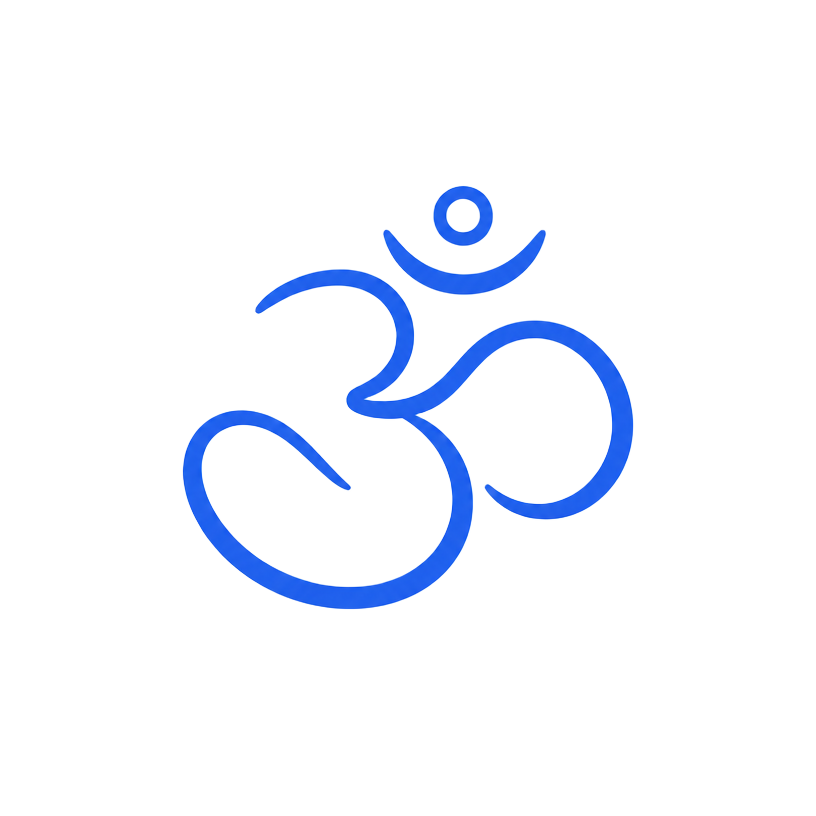
- Seed syllables (bija mantras) such as Om, or those associated with chakras in tantric texts, are a distinct, shorter category of mantra.
- Japa is the specific practice of repeating a mantra a set number of times, traditionally counted on a mala of 108 beads.
- Modern secular 'mantra' meditation (silently repeating any chosen calming word or phrase) borrows the word but is a simplified, non-ritual adaptation of a more specific and precise classical practice.
Derivation
Mantra is generally analysed as a combination of the root man, "to think", and the suffix -tra, which typically marks an instrument or means. On this common scholarly reading, mantra means something like "instrument of thought" or "that which is thought with" — a tool for or vehicle of thought and reflection. Traditional etymologies within Indian sources sometimes favour a related but distinct gloss, "that which protects (the one who reflects upon it)", playing on a connection with trā, "to protect". Both readings circulate in serious sources; the precise nuance is a matter of traditional and scholarly interpretation rather than a single settled fact.
Vedic origins
The oldest and most foundational mantras are the hymns of the Vedas, above all the Rig Veda, composed and transmitted orally with extraordinary attention to exact sound, pitch accent and metre over many centuries before being committed to writing. In this oldest layer, a mantra is not a freely chosen phrase but a specific, fixed verse whose correct recitation — including precise pronunciation — was considered essential to its ritual efficacy within Vedic sacrificial religion. This is a considerably more exacting practice than the popular modern sense of "a mantra" as any word or phrase one repeats for comfort.
Seed syllables and later devotional practice
Later tantric and devotional literature develops a second, shorter category: bija mantras, or "seed syllables" — single syllables such as Om, or those associated in tantric texts with particular chakras (for instance Laṃ, Vaṃ, Raṃ, Yaṃ, and others named in the Sat-Chakra-Nirupana). These function differently from a Vedic verse: they are treated as concentrated sound-forms associated with a deity, an element or a state of consciousness, used in meditation and ritual. Alongside these, devotional traditions developed longer mantras naming and invoking specific deities, recited as a central practice of bhakti (devotion).
Japa: the specific practice of repetition
Japa names the practice of repeating a mantra a set number of times, traditionally counted using a mala of 108 beads (with a 109th, the meru or "guru bead", marking the count's completion and not itself counted through). This is a distinct, named practice within the mantra tradition, not simply "repeating a word" in an undefined way — the texts and living traditions around japa specify counting, posture, and often silent or whispered recitation.
Modern usage and where it drifts
Contemporary secular meditation frequently uses "mantra" for any word or short phrase — sometimes entirely personal, invented in the moment ("I am calm", a single English word) — repeated silently as a focusing device. This is a legitimate and widely taught technique in its own right, and it borrows real structural insight from the classical practice (repetition as an anchor for attention). But it is a considerably simplified adaptation: it drops the precision of sound and the ritual, lineage-transmitted character that gives a classical mantra its specific traditional standing, and it is worth being clear that "any calming phrase you repeat" is not the same practice as the Vedic or tantric mantra tradition, even though both now share the English word.
Common misunderstandings
A frequent error is assuming mantra repetition works through a claimed vibrational or acoustic mechanism verifiable by physics or medicine in the way some popular sources assert; the texts describe mantra's power within their own ritual and contemplative framework, and that framework is not the same as a scientific claim about sound waves. Another is assuming any single Sanskrit-sounding syllable can be freely substituted for another without consequence within a lineage practice — in traditional transmission, specific mantras are typically given by a teacher for a reason tied to that lineage. A third is assuming "Om" is a simple, single-meaning word rather than a syllable carrying extensive commentary across Upanishadic and later literature (see the Mandukya Upanishad's treatment of Om across states of consciousness).
Where this is practised on the site
The mantra section covers named mantras, japa practice and the mala in detail. The texts section discusses the Vedic and Upanishadic sources mantra practice draws on.
Where this is practised here
Questions people ask
+ What does mantra actually mean?
+ Is any repeated calming phrase a mantra?
+ What is japa?
References
- Rig Veda (representative Vedic mantra source).
- Mandukya Upanishad (on Om).
- Sat-Chakra-Nirupana (on bija mantras associated with the chakras).
- Mallinson & Singleton, "Roots of Yoga" (Penguin Classics, 2017) — a scholarly anthology tracing the textual history of these terms.
Educational content, not medical advice. Check with a doctor before starting new practices if you have a health condition or are pregnant.